
The Sexiest Spec
Isn't on the Spec Sheet

"That heron didn't get away because of anything on the spec sheet. It got away because of a focus wheel that needed hunting for and eyecups that didn't fit."
The heron was forty yards off the trail, doing the thing herons do where they turn into a stick. Maybe eight seconds before it struck or spooked. You raised the binoculars. Eyecups folded down, dug straight into the bridge of your nose. You twisted them up one-handed, overshot, twisted back too far. The barrels wouldn't close all the way to your eyes, so for a second you had two herons drifting past each other before your brain snapped them into one. The focus wheel was small and stiff and not quite where your thumb landed. By the time the image sharpened, the heron had already speared its breakfast.
You blamed the light. It wasn't the light.
Ask anyone what makes a good binocular and they'll give you a number: magnification, objective lens size, field of view. Here's the one nobody puts on the box. The sexiest spec a binocular can have isn't a number at all, it's whether the eyecups, the inter-pupillary range, and the focus wheel disappear into your hands the second you pick it up. That heron didn't get away because of anything on the spec sheet. It got away because of a focus wheel that needed hunting for and eyecups that didn't fit.
Cornell Lab's Living Bird reviewers score this separately from image quality entirely, in a category they call "Overall Feel": ergonomics, weight, and ease of focus. That's the spec that actually decides whether you keep the bird or lose it.

You're doing math with your hands every time you raise the glass instead of just looking through it.
The Eyecup Problem Nobody Talks About
Eye relief and eyecup design get maybe one line in most buying guides, right after magnification and right before waterproof: yes. That's backwards. Cornell's own testers found that eyecup design varied wildly across manufacturers, some too stiff to fold back easily, others so pliable they wouldn't stay symmetrical, and a few that popped up unexpectedly mid-view. Getting this wrong doesn't just mean minor annoyance, it means a wide range of subjective "fit" ratings between reviewers testing the exact same models, because hand size, face shape, and glasses all change what "comfortable" means.
A twist-up-and-lock eyecup, set once and left alone, solves this.
You dial it in for your eyes or your glasses and never touch it again. Same logic applies to interpupillary distance: if the barrels can't close down to match the space between your eyes, you're doing math with your hands every time you raise the glass instead of just looking through it.

Where Your Thumb Finds the Focus Wheel
The other category Cornell's reviewers rate separately is ease of focus, and it's not really about how fine the focus is. It's about whether the wheel sits where your finger already is. A focus wheel that's too small, too stiff, or angled wrong forces you to look down and recalibrate your grip mid-observation, which is exactly the moment a bird decides to move.
An oversized focus wheel changes this. It's not a spec that shows up in a magnification comparison, but it's the difference between tracking a bird in one smooth motion and stopping to hunt for the right pressure point with your thumb.

More elements, when well-designed, mean more opportunities to correct compounding aberrations across the full frame.
Out of Your Head and Into the View
This is the part specs can't capture: a tool that's working right stops asking for your attention — you stop noticing the eyecups, the focus wheel, the weight in your hands — all of it recedes, and what's left is just the heron, the light, the moment. Designers have a name for this — a tool that "disappears" the instant it's actually working — and it applies just as well to binoculars as it does to a hammer or a well-worn pair of hiking boots. The gear that gets talked about least in the field is usually the gear doing its job best.
That's the whole argument against spec-chasing. The numbers on the box tell you what you'll theoretically see. They don't tell you whether you'll actually be looking, or fumbling.
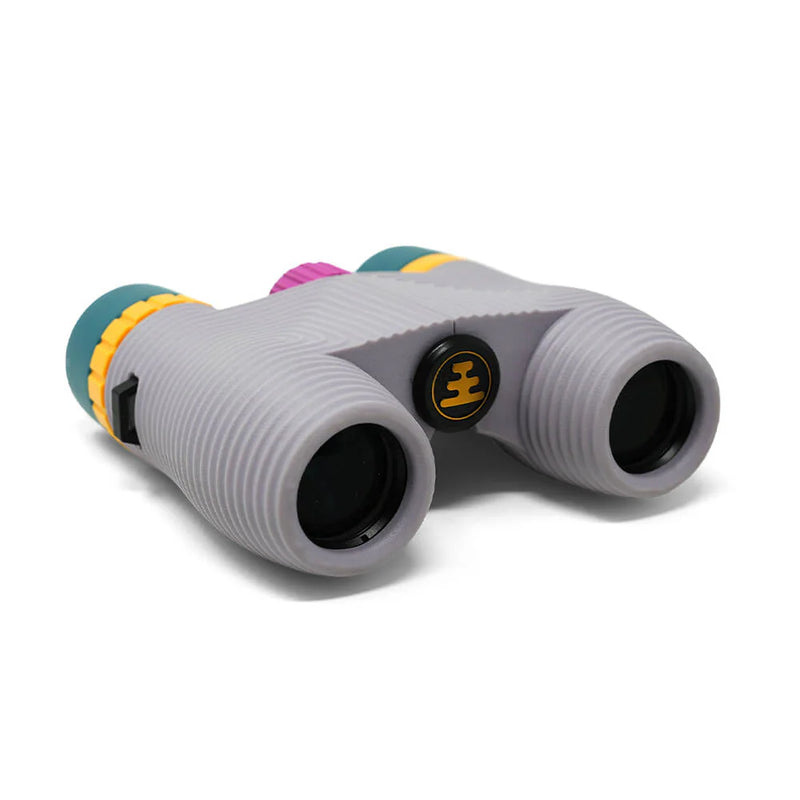
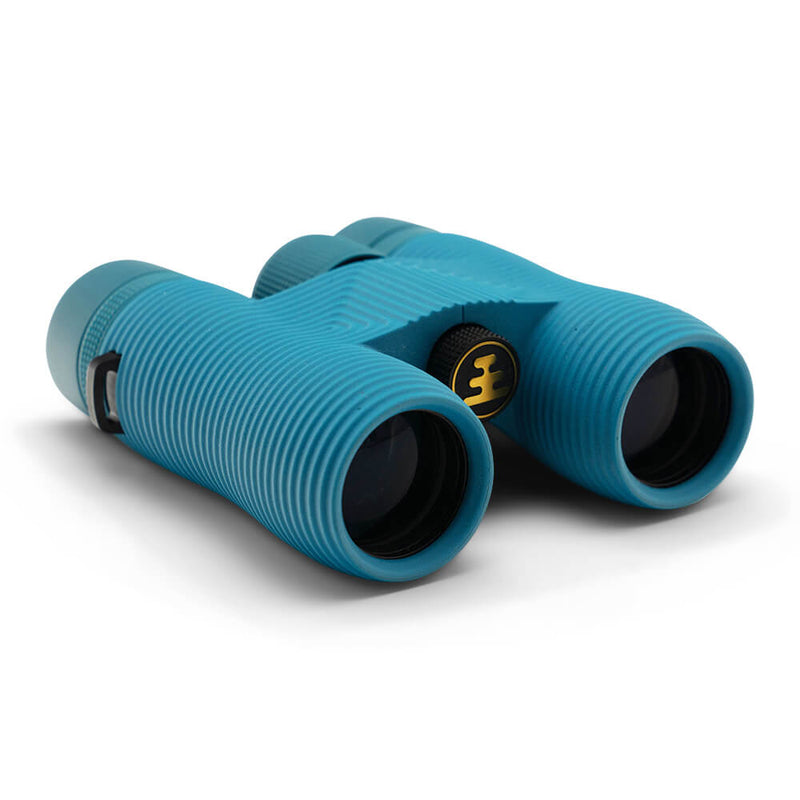
It's why the Field Issue 42 puts its oversized focus wheel exactly where your thumb already rests, and why its eyecups twist up and lock instead of asking you to guess. Not because those details win a spec war — they don't even show up in one. Because the whole point of the binoculars is to get out of the way, so the only thing left in focus is the heron.
